Two of the most commonly specified architectural lighting techniques are also two of the most commonly confused. Wall washing and wall grazing are both about directing light onto a vertical surface — but they serve fundamentally different design intentions, and the decision between them shapes everything from material selection to ceiling coordination to the emotional read of a space.
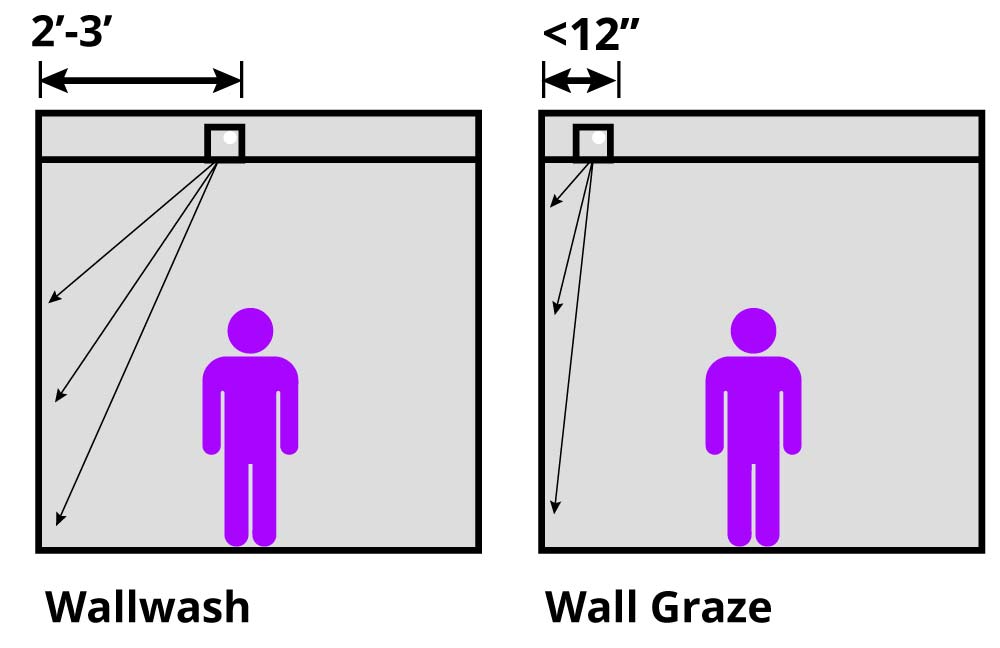
Getting that decision right early in a project saves significant time downstream. Here’s a clear-eyed look at what distinguishes these two approaches and when each one earns its place in a specification.
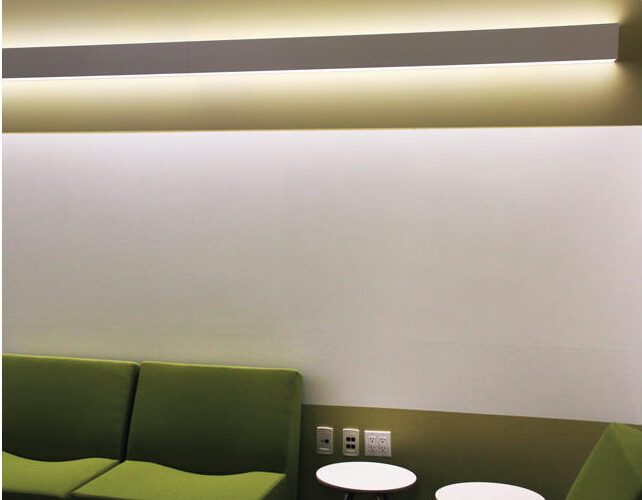
Wall Washing: Luminance, Openness, Uniformity
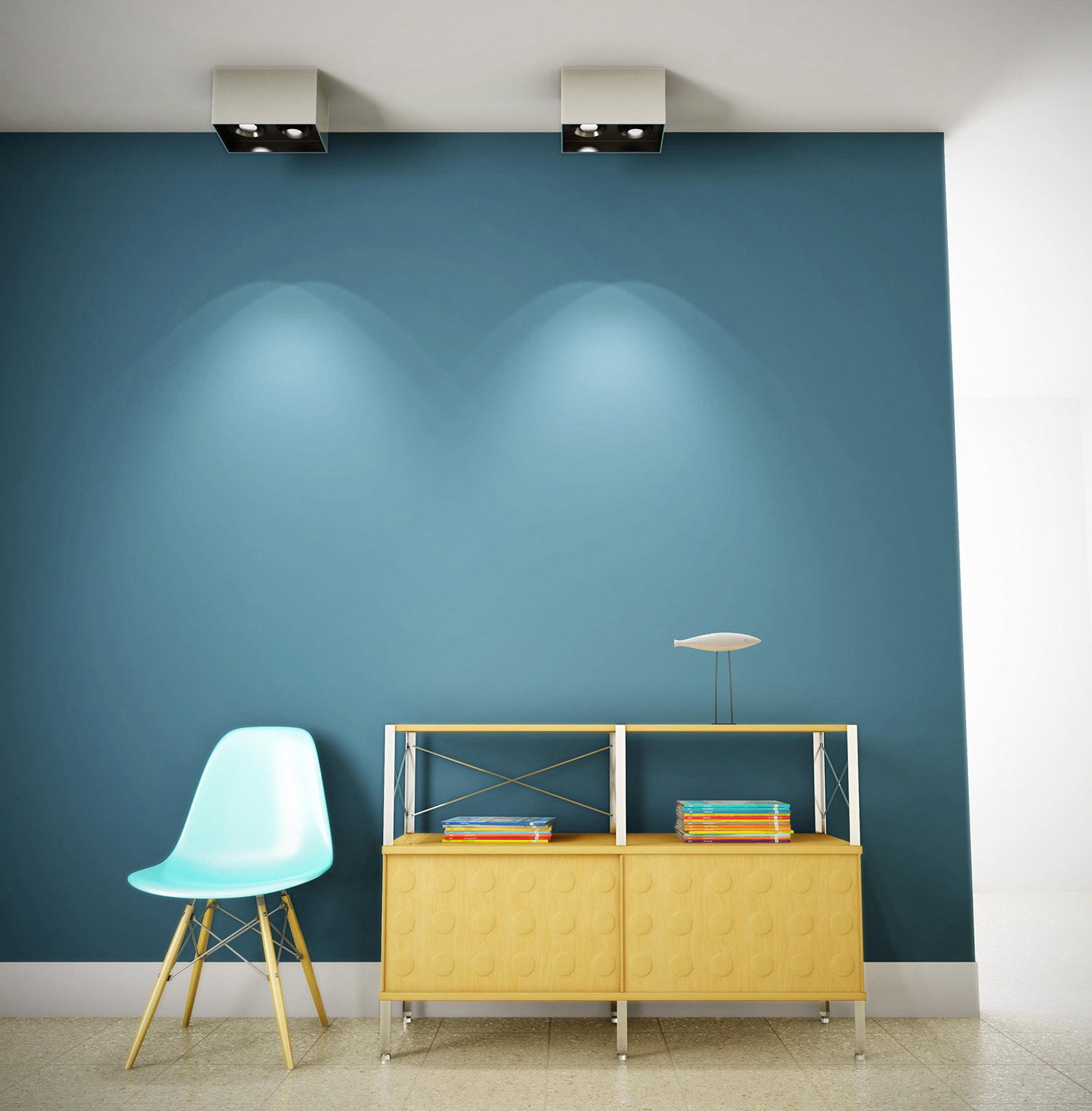
The purpose of a wall wash is even vertical illuminance — a smooth gradient of light that travels top to bottom without scalloping, hot spots, or visible fall-off. Done well, it creates a sense of brightness and spatial expansion that no amount of downlighting can replicate. It’s one of the most effective tools for making a space feel larger and more inviting.
Fixture placement is typically 2 to 3 feet from the wall, with spacing that mirrors the offset to maintain consistency across the run. Asymmetric optics do the heavy lifting, pushing light efficiently down the surface rather than scattering it back into the room. The coordination with the ceiling plane matters; wall washing rewards early integration into the architectural layout and punishes last-minute fixture placement.
This technique is the right call when the wall’s content is the feature: gallery art, brand graphics, fabric panels, or painted surfaces where color accuracy and even illumination take priority. It’s also the go-to strategy when a space needs to feel open and well-lit without relying on ambient overhead sources alone.
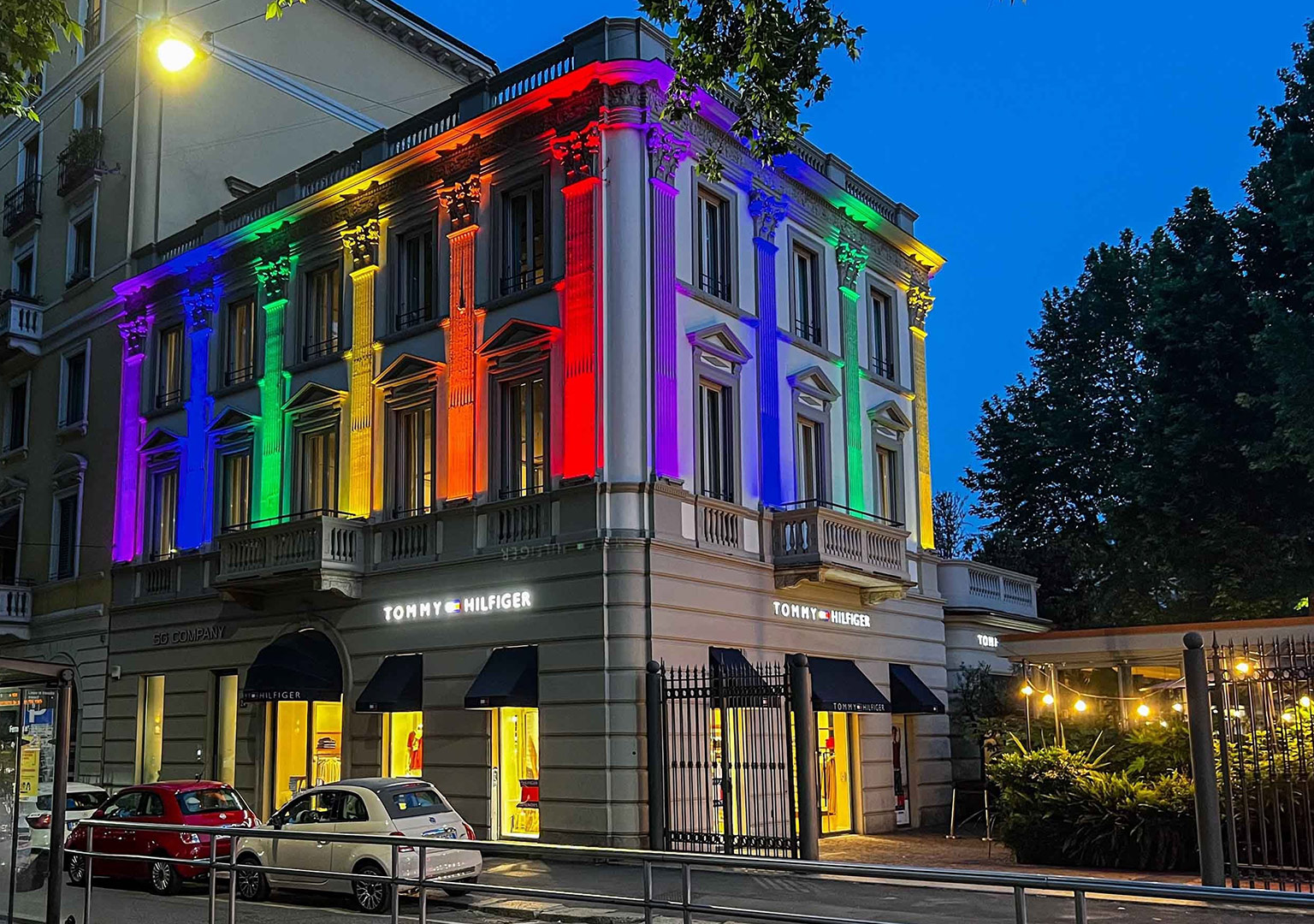
Linealux L3 RGBW luminaires, Lumascape
Wall Grazing: Texture, Drama, Materiality
Wall grazing takes light in the opposite direction, literally. Fixtures are placed 6 to 12 inches from the wall and aimed at an acute angle nearly parallel to the surface. That raking geometry causes light to skip across the material, throwing every ridge, seam, and imperfection into sharp relief.
The result is deeply tactile. Brick reads as dimensional. Concrete reveals its formwork. Stone becomes geological. Even a subtly textured plaster finish responds to a well-placed grazing source in a way that no photograph fully captures. It has to be experienced in person, which is exactly the point.
The critical variable here is the wall material itself. Grazing demands texture; on a smooth surface, it offers little reward and may surface imperfections better left unseen. When the material is right, though, grazing transforms a wall from a backdrop into a focal element, and that shift in hierarchy changes the entire character of a space.
Linear LED channels are a common choice for continuous grazing applications, while narrow-beam adjustable fixtures work well for more targeted effects. Either way, the optics need to deliver concentrated, directional output — this isn’t a technique for broad-distribution sources.
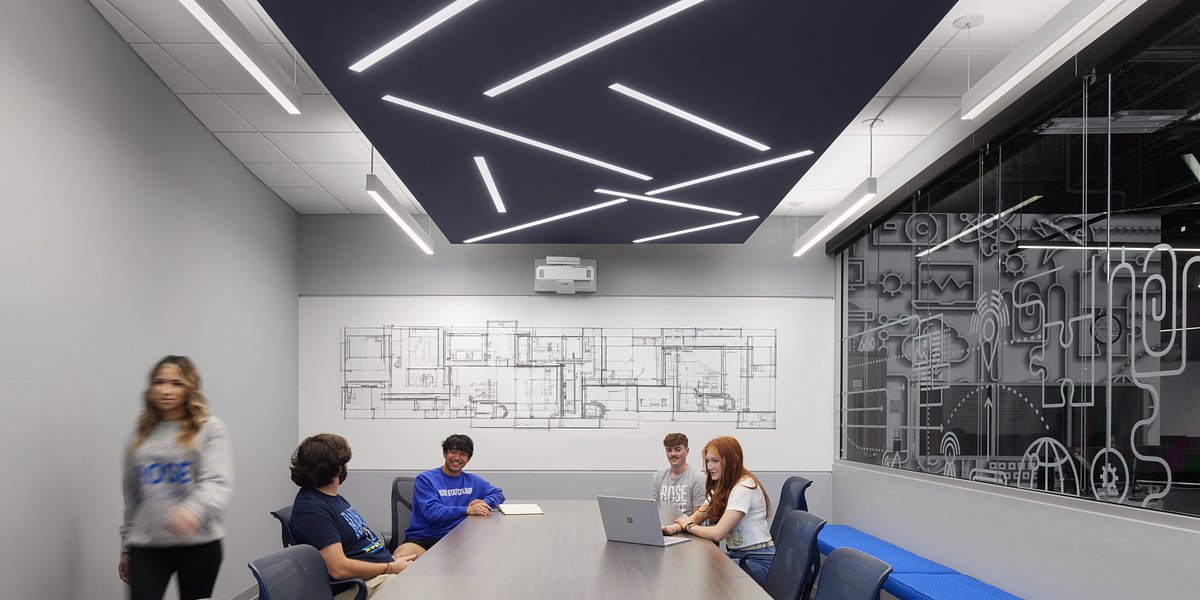
Suite of advanced lighting solutions, Lumato
Where Designers Get Into Trouble
The most common mistake with wall washing is fixture placement that drifts too close to the wall. The physics are unforgiving: reduce that offset and you trade a smooth gradient for pronounced scalloping. It’s a detail that reads immediately to any trained eye and is difficult to correct after construction.
With wall grazing, the risk is specifying the technique without fully coordinating with the material finishes. Grazing is a high-stakes approach, when the wall surface, fixture placement, and beam characteristics all align, the effect is exceptional. When any one of those variables is off, the result can feel harsh or unresolved. Early collaboration between the lighting designer, architect, and contractor is essential, not optional.
It’s also worth noting that these techniques are frequently used together within a single project. A stone feature wall behind a reception desk might be grazed for maximum drama while an adjacent corridor uses wall washing to maintain visual clarity and guide movement through the space. The interplay between the two can be part of the design language, producing a contrast that’s intentional and controlled.
Making the Call
The decision ultimately comes back to the wall surface and the design intention. Is the goal luminance or texture? Clarity or mood? Is the wall a neutral backdrop or the primary visual moment in the room?
Once that’s resolved, specification follows logically: fixture type, mounting geometry, beam distribution, and spacing are all downstream of the design intent. The details matter, but they’re much easier to get right when the concept is clear from the start.
At California Lighting Sales, our specification team works alongside lighting designers, architects, and designers throughout California to navigate exactly these decisions. Whether you’re sourcing asymmetric wall wash optics or high-output linear grazing channels, we’re here to help match the right product to the right application.
The wall is your canvas. Lighting determines whether it reads as surface or substance.
California Lighting Sales partners with leading architectural lighting manufacturers to support projects throughout California. Reach out to our specification team to discuss your next project.